A standard men's Olympic barbell weighs 20 kg (44 lb), and in most American gyms it's simply called "the 45". That covers the bar you'll use for squats, bench and deadlifts nine times out of ten. But gyms are full of other bars, and they don't all play by the same rules. Some weigh 15 lb. Some weigh 75. One of them, the Smith machine, might weigh almost nothing at all, which is great news for your ego and terrible news for your logbook.
Here's what every common bar weighs, how to tell them apart, and how to count them when you track your lifts.
Barbell weights at a glance
| Bar | Typical weight | Length | Used for |
|---|---|---|---|
| Men's Olympic bar | 20 kg / 44 lb (called 45 lb) | 2.2 m / 7.2 ft | Squat, bench, deadlift, most barbell work |
| Women's Olympic bar | 15 kg / 33 lb (called 35 lb) | 2.01 m / 6.6 ft | Olympic lifting, smaller hands |
| Technique bar | 5–7 kg / 10–15 lb | Varies | Learning lifts, warm-ups |
| EZ curl bar | 7–11 kg / 15–25 lb | About 1.2 m / 4 ft | Curls, skull crushers |
| Trap or hex bar | 20–34 kg / 45–75 lb | Varies | Trap bar deadlifts, carries |
| Safety squat bar | 27–32 kg / 60–70 lb | About 2.2 m | Squats that are easier on the shoulders |
| Standard (1-inch) bar | 7–11 kg / 15–25 lb | 1.5–1.8 m / 5–6 ft | Home gyms with small-hole plates |
| Smith machine bar | Anywhere from about 5 to 20 kg / 10 to 45 lb | Fixed in the machine | Machine squats, presses |
Specialty bars vary a lot from brand to brand. When in doubt, look at the end of the bar or the sleeve, where many manufacturers stamp the weight, or put it on a scale. Yes, people do this. No, it's not weird.
The Olympic bar: 20 kg, or "the 45"
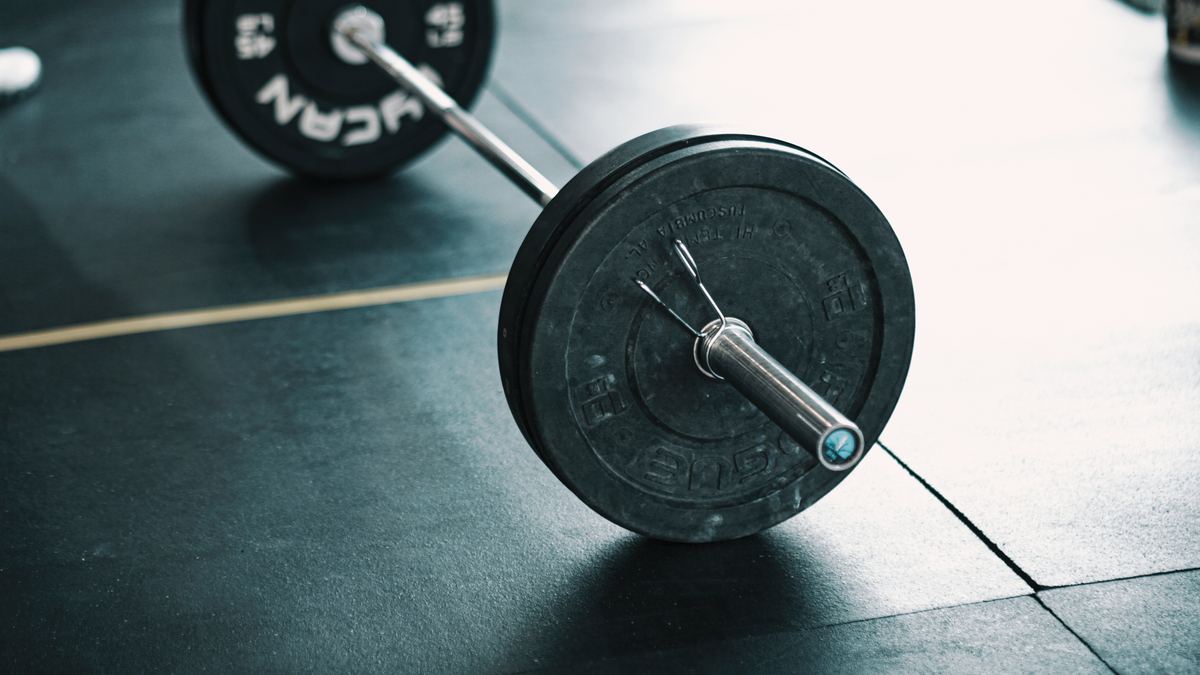
The men's Olympic bar is the one with rotating sleeves, a 28–29 mm grip and 2-inch holes for plates. It weighs 20 kg, which is 44.1 lb, and gyms in the US round it up to 45 lb so the math works with 45 lb plates. That's why "a plate a side" on bench means 135 lb: 45 for the bar plus 45 on each side.
Powerlifting bars are also 20 kg but are a little stiffer and have more aggressive knurling (the rough grippy pattern). Weightlifting bars spin more freely so you can turn the bar over fast on a clean. For the average gym-goer, both weigh the same and both count as 45.
The women's Olympic bar: 15 kg
The women's bar is shorter, has a thinner 25 mm grip and weighs 15 kg (33 lb, usually called 35). The thinner grip helps lifters with smaller hands hold the bar securely, especially on Olympic lifts. Anyone can use it. The bar doesn't check your ID.
The Smith machine: the great mystery
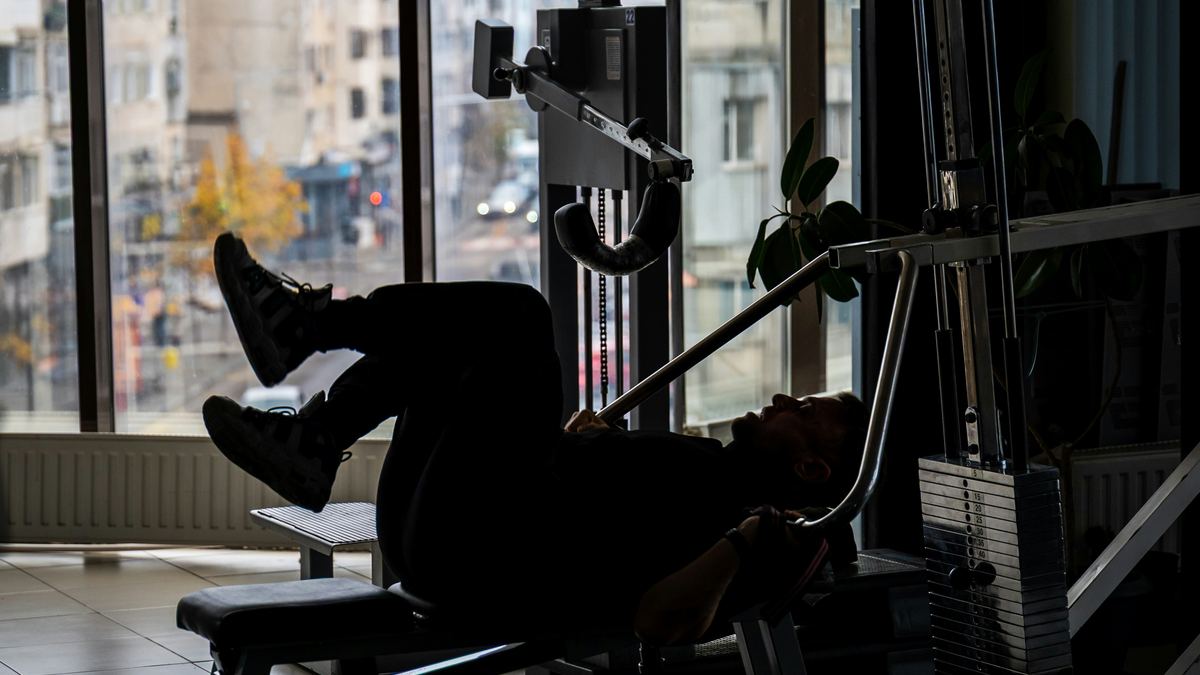
The Smith machine bar runs on rails, and many machines use counterweights so the bar feels lighter than its actual weight. That means the starting weight can be anything from around 10 lb to the full 45, depending on the machine. Some gyms put a sticker on the frame with the "effective" weight. Most don't.
Don't compare Smith numbers with free-weight numbers. The rails do the balancing for you and the starting weight is unknown, so a 225 lb Smith bench is not a 225 lb bench. Log them as separate exercises and your future self will thank you.
Trap bars, EZ bars and other oddballs
Trap or hex bars let you stand inside the bar for deadlifts, which keeps the weight closer to your center and is easier on many lower backs. They're usually heavier than an Olympic bar, often 55–65 lb, but brands vary a lot.
EZ curl bars have a zig-zag grip that's kinder to your wrists on curls and triceps work. Most weigh 15–25 lb. Some gyms have fixed-weight EZ bars with the plates welded on, which weigh exactly what the number on the end says.
Safety squat bars have padded yokes and handles in front, so you can squat without holding the bar behind you. They're heavy, around 60–70 lb, and they also make the squat feel harder at the same weight, so expect lower numbers.
Do you count the bar in your lifts?
Yes. Always. The bar is weight you're lifting, so a bench press with a 45 lb bar and two 45 lb plates is 135 lb, not 90. Every strength standard, competition total and program percentage assumes the bar is included. If you've been leaving it out, congratulations: you just got 45 lb stronger without lifting a thing.
The only exception is fixed-weight machines, where the number on the stack is what you log, and the Smith machine, where you should just pick a consistent method and stick to it.
How to tell which bar you've got
- Check the length. A full-length 7-foot bar with thick sleeves is almost always a 20 kg Olympic bar.
- Feel the grip. A noticeably thinner grip and a shorter bar usually means the 15 kg women's bar.
- Look at the sleeve or end cap. Many bars have their weight stamped there.
- Ask the staff. Gym staff know their equipment, or at least know where the scale is.
Frequently asked questions
Is the Olympic bar 45 lb or 44 lb?
An IWF or IPF-spec bar weighs 20 kg, which is 44.1 lb. US gyms call it 45 lb, and many bars made for the American market weigh exactly 45 lb. The difference is under 1 lb, so either number is fine for training.
How much does a Smith machine bar weigh?
It depends on the machine. Counterbalanced models can feel as light as 10–15 lb, while others weigh the full 45 lb. Look for a sticker on the frame or ask the gym staff.
How much does a curl bar weigh?
Most EZ curl bars weigh between 15 and 25 lb (7–11 kg). Fixed-weight curl bars weigh exactly what's printed on them.
Do collars count toward the weight?
Spring clips weigh so little you can ignore them. Competition collars weigh 2.5 kg each, so in a meet they count toward your total.