A Smith machine bar can have a starting weight anywhere from about 10 to 45 lb (5–20 kg). Many machines use counterweights that make the bar feel lighter, often around 15–25 lb, while machines without counterbalancing usually feel close to the full weight of the bar. There's no industry standard, so two Smith machines in the same gym can start at different weights.
Why Smith machine bars are different
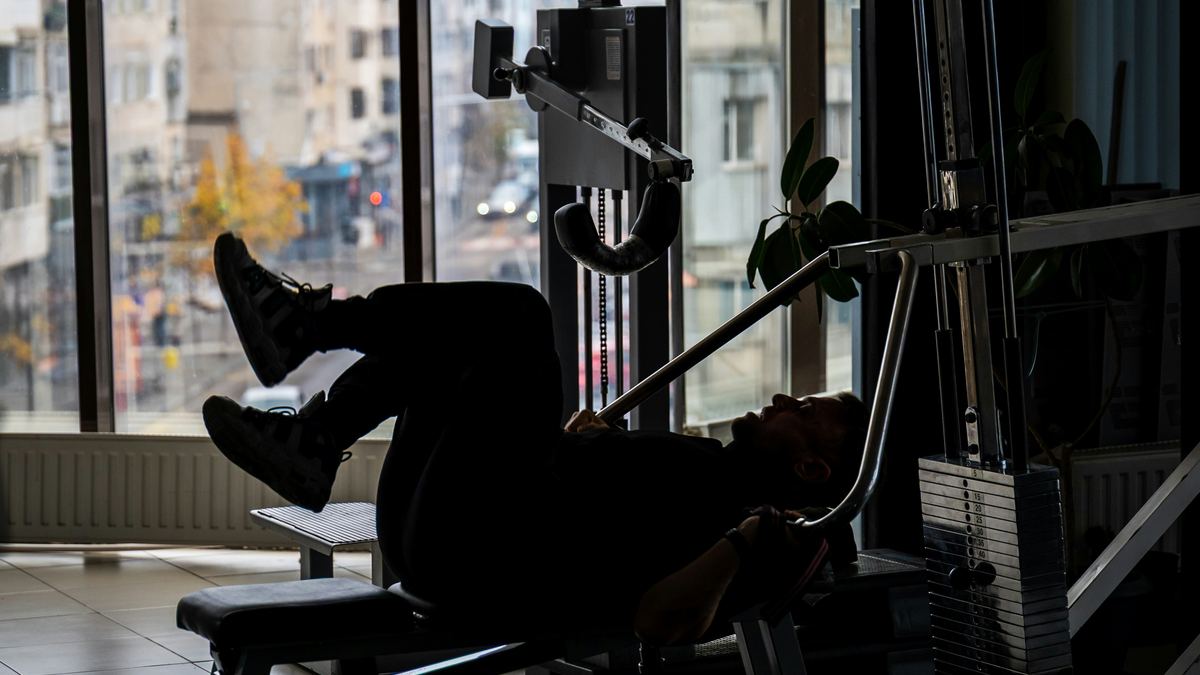
A Smith machine bar slides up and down on fixed rails. To make it easier to start light, many manufacturers attach the bar to counterweights inside the frame, a bit like an elevator. The bar itself might weigh 40 lb, but if 20 lb of counterweight is pulling it up, you only feel about 20.
The rails also do the balancing for you. You don't have to stop the bar drifting forward, backward or sideways, so you can usually move more weight than with a free barbell. That's not cheating; it's just a different exercise.
Typical Smith machine starting weights
| Type of machine | Typical starting weight |
|---|---|
| Counterbalanced, commercial gym | About 10–25 lb / 5–11 kg |
| Not counterbalanced | About 30–45 lb / 14–20 kg |
| Angled (7–12° rails) | Varies; the angle also changes how heavy it feels |
| Home gym Smith machine | Often 15–30 lb / 7–14 kg |
These are typical ranges, not guarantees. The only number that counts is the one for the machine you're actually using.
How to find out what your Smith machine bar weighs
- Look for a sticker. Many machines have a label on the frame with the "starting resistance" or "effective bar weight".
- Check the manual or brand. Find the brand name on the frame and look up the model online.
- Ask the staff. Front desks hear this question more than "where's the bathroom".
- Use a luggage scale. Hook it on the middle of the unlocked bar and gently lift until the bar starts moving. The reading is roughly the weight you feel. It's not lab-precise, but it's good enough.
How to log Smith machine lifts
Here's the simplest system that works:
- Log Smith lifts as their own exercise. "Smith bench" and "bench press" are different lifts. Comparing them is like comparing your treadmill time with a trail run.
- Pick one way to count the bar and stick with it. Either count the plates only, or plates plus the sticker weight. Consistency matters more than the exact number.
- Use the same machine when you can. A different brand can feel 20 lb heavier or lighter.
Don't use Smith numbers in strength standards. Strength levels and calculators like our strength standards assume a free barbell. Plug in Smith numbers and you'll look stronger than you are, which feels great right up until you try a real barbell.
Is the Smith machine bad?
No. It has a bad reputation online, but it's a useful tool. It's great for controlled muscle-building work, for training alone without a spotter (the safety catches are built in) and for exercises like split squats or incline presses. It just isn't a replacement for learning free-weight lifts if your goal is strength in the squat, bench and deadlift.
Frequently asked questions
Is the Smith machine bar 45 lb?
Sometimes, but often not. Counterbalanced machines usually feel like 10–25 lb. Check the sticker on the frame or ask the gym.
Is lifting on the Smith machine easier?
Usually, yes. The rails stabilize the bar, so most people can lift more on a Smith machine than with a free barbell.
Should I count the bar on the Smith machine?
Count it the same way every time. Many lifters add the effective bar weight from the sticker; others count plates only. Either works if you're consistent.
How much does a Smith machine bar weigh in kg?
Typically between about 5 and 20 kg of starting resistance, depending on the machine and whether it's counterbalanced.
Curious about the other bars in the gym? Read how much a barbell weighs and how much a curl bar weighs.