Body fat percentage is the share of your total weight that is fat. If you weigh 200 lb and have 20% body fat, you're carrying 40 lb of fat and 160 lb of everything else: muscle, bone, organs and water. It's a far better measure of progress than weight alone, especially if you lift, because building muscle and losing fat at the same time can leave the scale stuck while your body changes.
Body fat percentage chart
These categories are the ones published by the American Council on Exercise and are widely used in gyms.
| Category | Men | Women |
|---|---|---|
| Essential fat | 2–5% | 10–13% |
| Athletes | 6–13% | 14–20% |
| Fitness | 14–17% | 21–24% |
| Average | 18–24% | 25–31% |
| Above average | 25%+ | 32%+ |
Women naturally carry more essential fat than men, linked to hormones and reproductive health. That's why every category sits several points higher for women. Comparing a woman's body fat with a man's is like comparing a marathon time with a 100 m time: same sport, different scale.
What each range usually looks like
Everyone stores fat differently, so two people with the same percentage can look quite different. As a rough guide for men:
- 8–10%: very lean. Visible abs, veins on the arms and often the lower abdomen. Hard to maintain year-round.
- 12–15%: lean and athletic. Abs are visible in good lighting, which is why every gym mirror has good lighting.
- 18–20%: healthy and fit-looking in clothes, with little visible muscle definition around the waist.
- 25% and above: fat gathers around the waist and lower back, and health risks start to rise.
For women:
- 16–19%: very lean, athletic look, often with visible abs. Can affect hormones and the menstrual cycle if held for long.
- 20–24%: fit and toned, with some muscle definition in the arms and legs.
- 25–30%: healthy and average, with softer curves.
- 32% and above: more fat around the hips, thighs and waist, and health risks start to rise.
Healthy body fat by age
Body fat naturally creeps up with age, even when weight stays the same, as muscle declines slowly. Strength training is one of the best ways to slow that process. As a broad guide, many health sources treat roughly 8–25% for men and 21–36% for women as a healthy range across adulthood, with the upper end more common in older age groups. Your doctor can give you a target that fits your health history.
How to measure body fat
| Method | Cost | Accuracy | Notes |
|---|---|---|---|
| DEXA scan | $$$ | High | Lab method, also measures bone density |
| Hydrostatic weighing | $$$ | High | You get dunked in a tank. Fun at parties. |
| Skinfold calipers | $ | Medium | Good if the same trained person measures you each time |
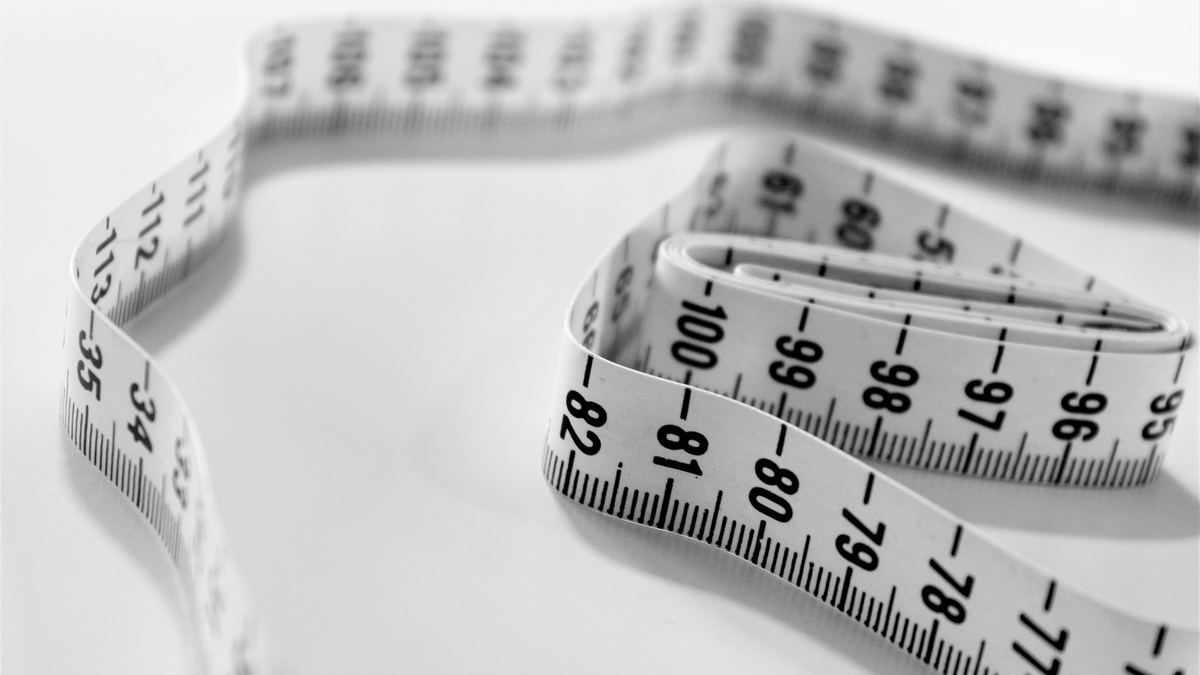
| Tape measure (US Navy method) | Free | Medium | Quick and repeatable at home |
| Smart scale (bioimpedance) | $$ | Low to medium | Swings with hydration; best for trends, not single readings |
The best method is the one you'll repeat the same way every few weeks. A tape measure used on the same morning routine will tell you far more about your progress than a single fancy scan.
How to lower your body fat
- Eat in a moderate calorie deficit. Our TDEE calculator gives you a starting number.
- Keep protein high so you lose fat, not muscle.
- Keep lifting heavy. Training tells your body the muscle is still needed.
- Be patient. Losing about 0.5–1% of body weight per week is a sustainable pace.
Frequently asked questions
What body fat percentage shows abs?
Usually around 10–12% for men and 18–20% for women, though genetics decide where you store fat and how visible your abs are.
Is BMI the same as body fat?
No. BMI only uses height and weight, so a muscular lifter can be rated "overweight" with low body fat. Body fat percentage separates fat from muscle.
How often should I measure?
Every 2–4 weeks is plenty. Body fat changes slowly, and measuring daily mostly measures water and lunch.