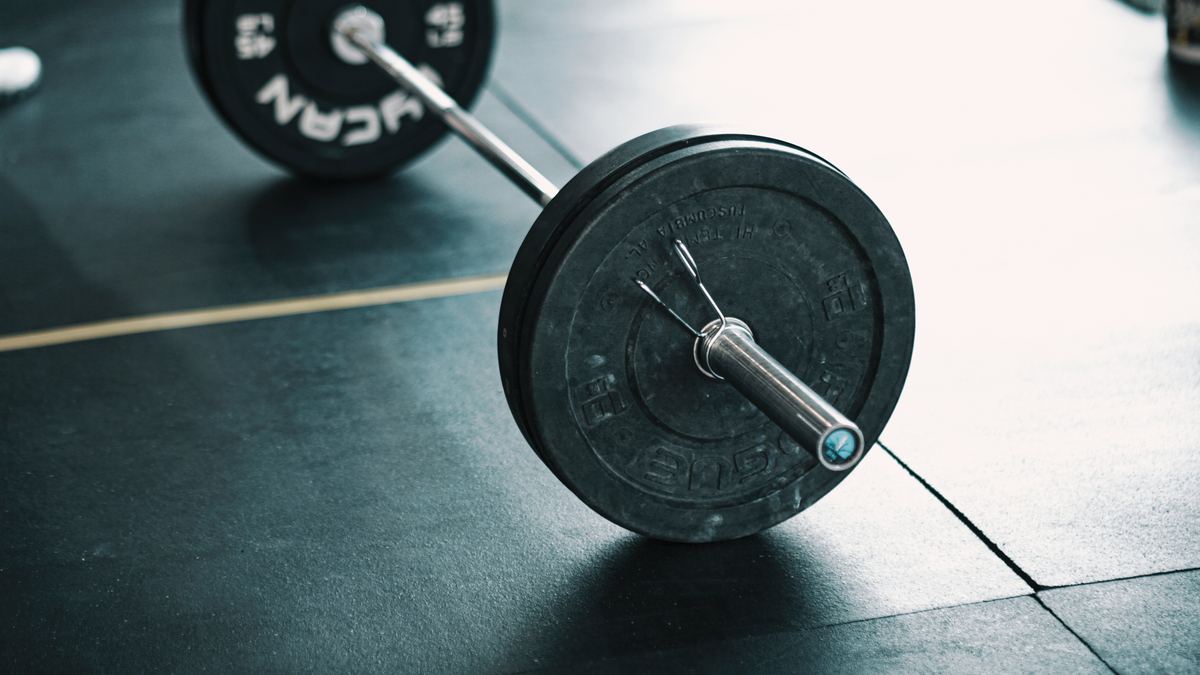
When lifters talk about "plates", they mean 45 lb plates on each side of a 45 lb Olympic bar. One plate is 135 lb, two plates is 225 lb, three plates is 315 lb and four plates is 405 lb. Each extra 45 on both sides adds 90 lb to the bar.
| Gym slang | Plates per side | Total weight | In kilograms (approx.) |
|---|---|---|---|
| One plate | 1 × 45 lb | 135 lb | 61 kg |
| Two plates | 2 × 45 lb | 225 lb | 102 kg |
| Three plates | 3 × 45 lb | 315 lb | 143 kg |
| Four plates | 4 × 45 lb | 405 lb | 184 kg |
| Five plates | 5 × 45 lb | 495 lb | 225 kg |
These numbers come up so often because they look great on a bar. A clean row of big plates is the gym equivalent of a perfectly organized bookshelf. Nobody brags about benching 210.
The formula
Total weight = bar + (plates on one side × 2). For a target weight, flip it around: subtract the bar, then divide by two to get what goes on each side. For 275 lb: 275 − 45 = 230, divided by 2 = 115 lb per side, which is 45 + 45 + 25.
Loading chart in pounds
With a 45 lb bar, loading the heaviest plates first.
| Total | Each side |
|---|---|
| 95 lb | 25 |
| 115 lb | 35 |
| 135 lb | 45 |
| 155 lb | 45 + 10 |
| 185 lb | 45 + 25 |
| 205 lb | 45 + 35 |
| 225 lb | 45 + 45 |
| 245 lb | 45 + 45 + 10 |
| 275 lb | 45 + 45 + 25 |
| 315 lb | 45 + 45 + 45 |
| 365 lb | 45 + 45 + 45 + 25 |
| 405 lb | 45 + 45 + 45 + 45 |
| 455 lb | 45 + 45 + 45 + 45 + 25 |
| 495 lb | 45 + 45 + 45 + 45 + 45 |
If your gym has no 35s, use 25 + 10 instead. If it has no 2.5s, blame management.
Loading chart in kilograms
With a 20 kg bar and standard competition plates.
| Total | Each side |
|---|---|
| 40 kg | 10 |
| 60 kg | 20 |
| 70 kg | 25 |
| 80 kg | 25 + 5 |
| 100 kg | 25 + 15 |
| 120 kg | 25 + 25 |
| 140 kg | 25 + 25 + 10 |
| 160 kg | 25 + 25 + 20 |
| 180 kg | 25 + 25 + 25 + 5 |
| 200 kg | 25 + 25 + 25 + 15 |
| 220 kg | 25 + 25 + 25 + 25 |
| 250 kg | 25 + 25 + 25 + 25 + 15 |
In kilo gyms, people talk in "reds" instead of plates: 140 kg is "two reds and a green", because 25 kg plates are red and 10 kg plates are green.
Plate colors
| Color | Kilogram plates | Common pound bumpers |
|---|---|---|
| Red | 25 kg | 55 lb |
| Blue | 20 kg | 45 lb |
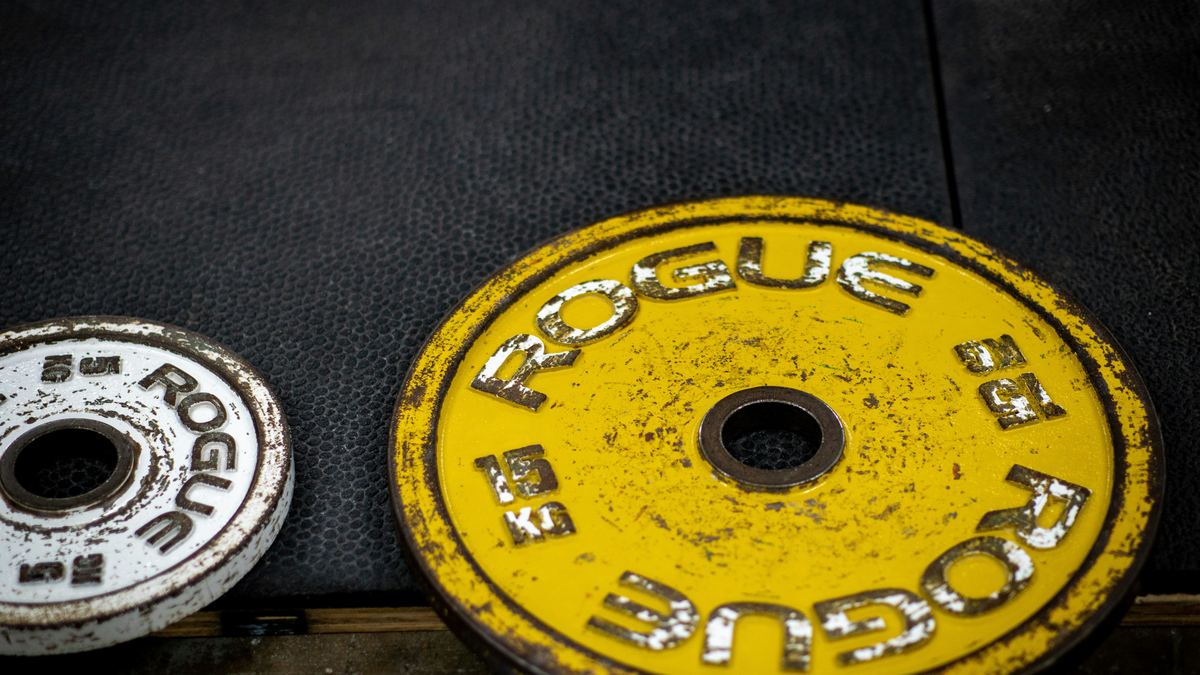
| Yellow | 15 kg | 35 lb |
| Green | 10 kg | 25 lb |
| White | 5 kg | 10 lb |
Kilogram colors are a competition standard. Pound bumper colors are a common convention, but iron plates and some brands don't follow it, so always read the number on the plate.
Plate etiquette
- Unload your bar. Leaving 4 plates on the leg press is not a flex. It's a chore you gave to a stranger.
- Load evenly. Take plates off one side at a time and the bar can tip. Alternate sides.
- Use collars on squats and overhead work, so plates don't slide off when the bar isn't perfectly level.
Frequently asked questions
Is 225 two plates?
Yes. A 45 lb bar plus two 45 lb plates on each side equals 225 lb.
How much is one plate in kg?
One 45 lb plate is about 20.4 kg. "One plate" on the bar (135 lb) is about 61 kg in total.
Do "plates" include the bar?
The plate count refers to what's on each side, but the total weight (135, 225, 315) always includes the 45 lb bar.