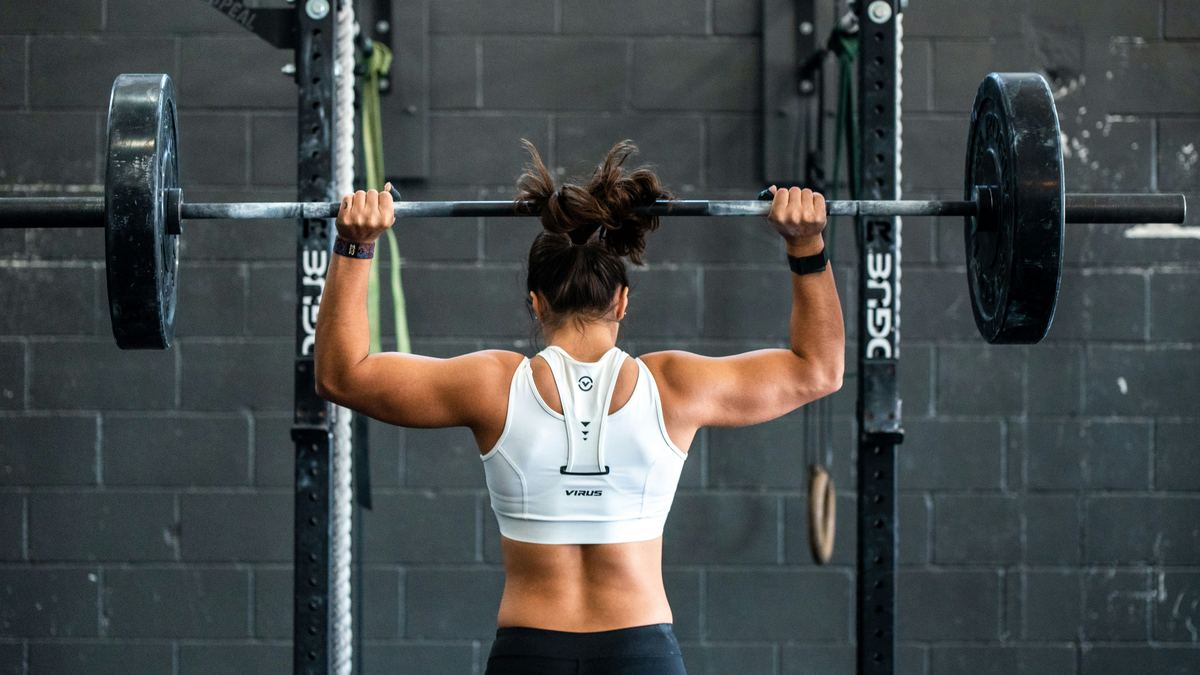
A man who has trained consistently for a year or two typically squats around 1.5 times his body weight, and a woman around 1.25 times. Brand-new lifters usually start closer to their own body weight or below, and competitive lifters squat 2.5 to nearly 3 times their body weight. Somewhere, a powerlifter is squatting your car.
As with every lift, raw numbers only tell half the story. The tables below show typical one-rep max squats at each level for common body weights, so you can compare yourself fairly.
What counts as a squat here
These numbers assume a back squat with a barbell, to at least parallel (hip crease level with the top of the knee), without knee wraps or squat suits. Quarter squats with a bar that bends like a fishing rod don't count. We all know the guy. We all love him. His squat doesn't count.
Average squat for men
One-rep max in pounds, rounded to the nearest 5 lb. Based on 0.75×, 1.25×, 1.5×, 2.25× and 2.75× body weight.
| Body weight | Beginner | Novice | Intermediate | Advanced | Elite |
|---|---|---|---|---|---|
| 130 lb (59 kg) | 100 | 160 | 195 | 290 | 360 |
| 150 lb (68 kg) | 110 | 190 | 225 | 340 | 410 |
| 170 lb (77 kg) | 130 | 210 | 255 | 380 | 470 |
| 190 lb (86 kg) | 140 | 240 | 285 | 430 | 520 |
| 210 lb (95 kg) | 160 | 260 | 315 | 470 | 580 |
| 230 lb (104 kg) | 170 | 290 | 345 | 520 | 630 |
| 250 lb (113 kg) | 190 | 310 | 375 | 560 | 690 |
Average squat for women
One-rep max in pounds, rounded to the nearest 5 lb. Based on 0.5×, 0.75×, 1.25×, 1.5× and 2× body weight.
| Body weight | Beginner | Novice | Intermediate | Advanced | Elite |
|---|---|---|---|---|---|
| 100 lb (45 kg) | 50 | 75 | 125 | 150 | 200 |
| 120 lb (54 kg) | 60 | 90 | 150 | 180 | 240 |
| 140 lb (64 kg) | 70 | 105 | 175 | 210 | 280 |
| 160 lb (73 kg) | 80 | 120 | 200 | 240 | 320 |
| 180 lb (82 kg) | 90 | 135 | 225 | 270 | 360 |
| 200 lb (91 kg) | 100 | 150 | 250 | 300 | 400 |
Women are relatively much stronger in the lower body than the upper body, so the gap between men's and women's squat ratios is smaller than on the bench press. Squatting body weight is a great early milestone for women; squatting 1.5× is advanced.
How age affects your squat
Leg strength holds up well with training, but recovery slows as you get older. Lifters over 40 often do best squatting heavy once a week and adding a lighter technique session, instead of grinding heavy sets twice a week. Masters lifters regularly set personal records into their 50s and beyond, especially if they started lifting later in life.
How to squat more
- Squat at least twice a week. Frequency is the fastest way to improve a skill-heavy lift.
- Own your depth. Find the depth you can hit with a neutral back every rep, then build strength there. Adding weight to bad reps just makes heavier bad reps.
- Brace properly. Big breath into your belly, tighten your core like someone's about to poke you, then descend. A lifting belt helps once you know how to brace without it.
- Strengthen your weak point. Pause squats fix bottom-position weakness; front squats build upper back and quads.
- Don't skip leg day. It's in our name. We had to say it.
Squat safety
Squat inside a rack with the safety bars set just below your bottom position. If a rep fails, you sit down and let the bar rest on the safeties. Learning to bail safely with an empty bar is a five-minute lesson that can save your whole year.
Frequently asked questions
Is a 2× body weight squat good?
Yes. For men it sits between intermediate and advanced, and for women it's elite level. It usually takes several years of consistent training.
Should I squat below parallel?
If you can do it with good form, yes. Deeper squats train more muscle through a bigger range of motion. Competition rules require at least parallel.
Is the squat bad for your knees?
For healthy knees, well-performed squats are safe and strengthen the muscles that support the joint. Pain is a signal to check technique and load, or see a professional.