There's no hard limit on how much protein your body can use from one meal. You absorb practically all of it; larger servings just take longer to digest. For building muscle, a practical target is about 0.4 g per kg of body weight per meal (0.18 g per lb), spread over three to five meals. For most people that's 25–50 g per meal.
Where the "30 grams" myth comes from
Early studies measured how much a single serving of protein switched on muscle building in the hours after eating. Around 20–25 g of high-quality protein seemed to max out the response in young adults over a few hours. That got simplified into "you can only absorb 30 g", which isn't what the studies said. They measured short-term muscle building, not absorption, and they didn't look at what happens over a longer window.
A 2018 review by Schoenfeld and Aragon looked at the evidence and concluded that eating around 0.4 g/kg per meal across at least four meals, for a total of about 1.6 g/kg per day, is a sensible way to maximise muscle growth, with up to 0.55 g/kg per meal for those aiming at the top of the daily range.
More recently, a 2023 study gave trained participants either 25 g or 100 g of protein after a workout. The 100 g dose produced a larger and much longer-lasting muscle-building response, lasting more than 12 hours. In other words, your body doesn't throw away the extra; it just uses it over a longer period.
How much protein per meal, by body weight
| Body weight | ~0.4 g/kg per meal | ~0.55 g/kg per meal |
|---|---|---|
| 60 kg (132 lb) | 24 g | 33 g |
| 70 kg (154 lb) | 28 g | 39 g |
| 80 kg (176 lb) | 32 g | 44 g |
| 90 kg (198 lb) | 36 g | 50 g |
| 100 kg (220 lb) | 40 g | 55 g |
Multiply by the number of meals you eat to check you're hitting your daily total. If you only eat twice a day, simply eat bigger servings; it still works.
Does meal timing matter?
Much less than total daily protein. The order of importance looks roughly like this:
- Total protein per day. By far the biggest factor. Get this right first with our protein calculator.
- Spreading it reasonably. Three to five meals with a decent serving each beats one tiny breakfast and one enormous dinner, but the difference is modest.
- Around training. Having a protein-rich meal within a few hours before or after training is a good habit. The "30-minute anabolic window" is mostly marketing; there's no need to sprint to the shaker.
- Before bed. A serving of slow-digesting protein, such as cottage cheese or casein, can help a little, especially if your total is on the low side.
Practical ways to hit 30–40 g in a meal
- 4 eggs + 100 g cottage cheese
- 200 g Greek yogurt + 1 scoop whey stirred in
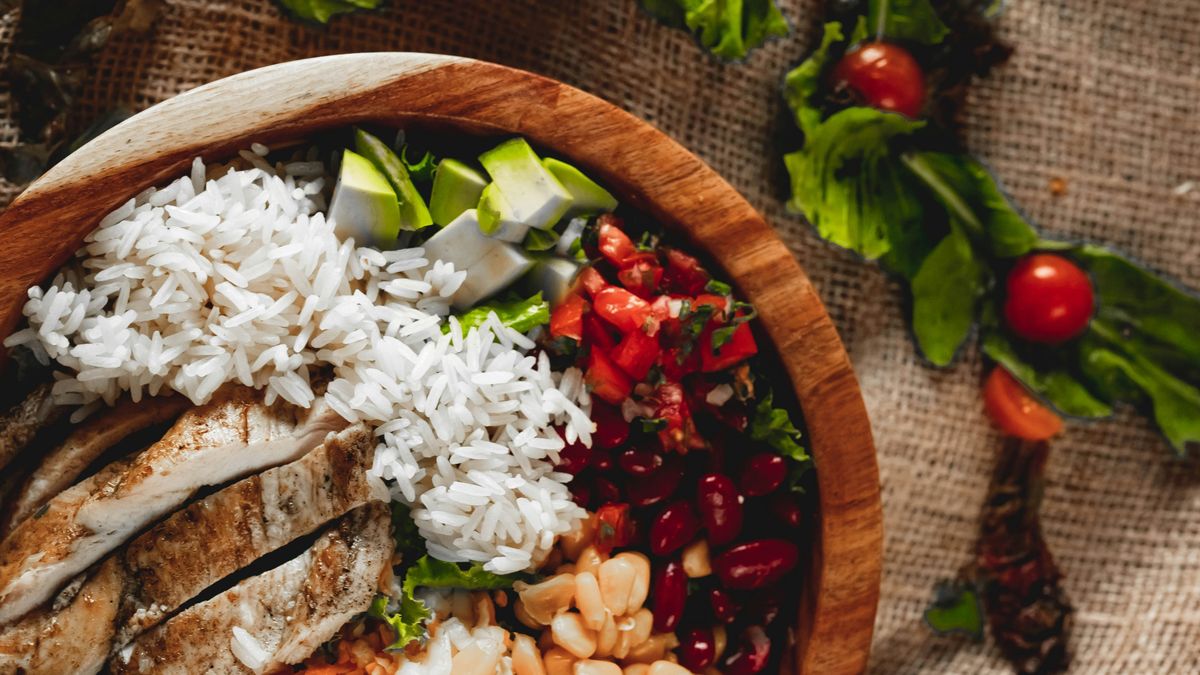
- 130 g cooked chicken breast with rice and vegetables
- 150 g canned tuna in a wrap or salad
- 150 g firm tofu + 1 cup cooked lentils
Who should aim for bigger servings
- Older lifters, whose muscles respond less to small doses of protein.
- People eating two or three meals a day, who need bigger meals to hit their daily target.
- Plant-based eaters, since plant proteins are slightly less effective gram for gram.
- Anyone in a calorie deficit, when protein needs are higher overall.
Frequently asked questions
Is 50 g of protein in one meal a waste?
No. Your body uses it; it just takes longer. Larger servings may simply mean you need fewer protein-rich meals in the day.
Can I eat all my protein in one meal?
It's possible, but spreading it over three or more meals is probably slightly better for muscle building and is usually easier on digestion.
Does protein timing matter for weight loss?
Protein at each meal helps with fullness, which makes a diet easier to stick to. Total daily intake still matters most.
Sources
- Schoenfeld, B. J., & Aragon, A. A. (2018). How much protein can the body use in a single meal for muscle-building? Implications for daily protein distribution. Journal of the International Society of Sports Nutrition, 15, 10.
- Trommelen, J., et al. (2023). The anabolic response to protein ingestion during recovery from exercise has no upper limit in magnitude and duration in vivo in humans. Cell Reports Medicine, 4(12), 101324.
- Jäger, R., et al. (2017). International Society of Sports Nutrition position stand: protein and exercise. Journal of the International Society of Sports Nutrition, 14, 20.
- Morton, R. W., et al. (2018). A systematic review, meta-analysis and meta-regression of the effect of protein supplementation on resistance training-induced gains in muscle mass and strength in healthy adults. British Journal of Sports Medicine, 52(6), 376–384.