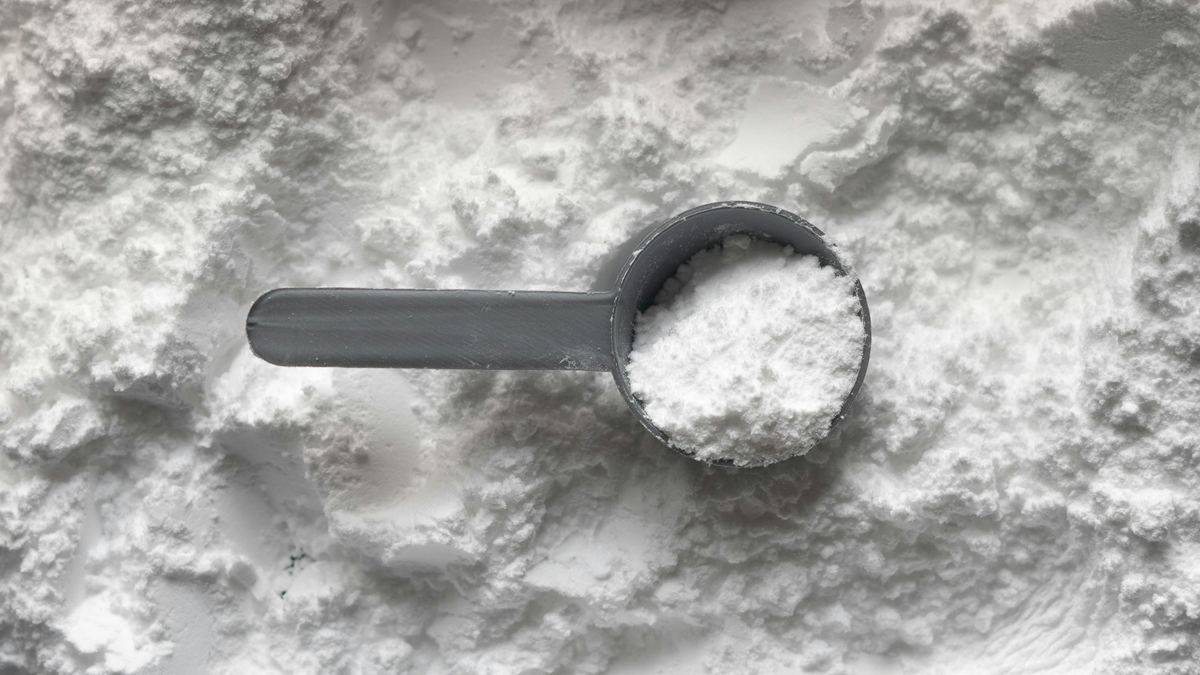
The short answer: take 3–5 g of creatine monohydrate every day, at whatever time you'll remember. A loading phase is optional. That's it. Everything else is details, and the details are where supplement companies make their money.
What creatine does
Creatine helps your muscles regenerate ATP, the energy molecule used in short, intense efforts like a heavy set of squats or a sprint. Your body makes some, and you get more from meat and fish, but supplementing fills your muscle stores to the top. With fuller stores you can typically squeeze out an extra rep or two, and over weeks and months those extra reps add up to more strength and muscle.
The research is unusually solid. The International Society of Sports Nutrition's 2017 position stand on creatine calls creatine monohydrate the most effective supplement available for increasing high-intensity exercise capacity and lean body mass.
How much creatine per day
| Approach | Dose | Time to full stores |
|---|---|---|
| Daily dose (no loading) | 3–5 g per day | About 3–4 weeks |
| Loading phase | About 20 g per day (0.3 g per kg), split into 4 doses, for 5–7 days, then 3–5 g per day | About 1 week |
Both routes end in the same place. Loading just gets you there faster, at the cost of more powder and, for some people, an upset stomach. If you're not in a hurry, skip it. Your muscles don't know it's Monday.
When to take creatine
Creatine works by building up in your muscles over time, so timing matters far less than taking it every day. Some studies hint at a small advantage for taking it around your workout, but the difference is minor. The best time to take creatine is the time you'll actually remember. Many people mix it into their morning coffee, protein shake or post-workout meal.
Which type of creatine?
Creatine monohydrate. It's the form used in almost all the research, it's cheap and it works. Fancier versions (ethyl ester, buffered, "liquid creatine" and so on) cost more and haven't been shown to work better. Micronized monohydrate dissolves more easily, which is nice but not essential. Look for third-party tested products so you know what's in the tub.
Side effects and myths
- Water weight: you may gain 1–2 kg (2–4 lb) in the first weeks, mostly water stored inside the muscle. That's not fat, and it's part of how creatine works.
- Kidneys: in healthy people, research hasn't shown kidney damage at recommended doses. Creatine can raise creatinine on a blood test, which can confuse results, so tell your doctor you're taking it.
- Hair loss: one small study in 2009 found a rise in a hormone linked to hair loss. It has not been confirmed, and no study has shown that creatine actually causes hair loss.
- Bloating or cramps: usually from large single doses during loading. Split the dose or skip loading.
- Is it a steroid? No. Creatine is a natural compound found in food and in your own body. It's legal and allowed in sport.
Who should be careful
People with kidney disease, those taking medications that affect the kidneys, pregnant or breastfeeding women, and anyone under 18 should talk to a doctor before taking creatine. Supplements are not tightly regulated, so stick to reputable, tested brands.
Do you need creatine?
No. You can build an excellent physique without it. Training, protein, calories and sleep matter far more. But if you're already doing those well and want a cheap, safe, proven boost, creatine is the one supplement most experts agree is worth it. Think of it as a small tailwind, not a rocket engine.
Frequently asked questions
Do I need to cycle creatine?
No. There's no evidence that cycling on and off is necessary. You can take it daily year-round.
Should I take creatine on rest days?
Yes. Taking it every day keeps your muscle stores full, which is what makes it work.
What happens when I stop taking creatine?
Your muscle stores slowly return to normal over several weeks and you'll lose the extra water weight. You keep the muscle you built.
Does creatine work for women?
Yes. Women see similar benefits for strength and lean mass, and the same 3–5 g daily dose applies.
This guide is general information, not medical advice. Check with a doctor before taking any supplement if you have a health condition or take medication.